Author
lorem ipsum
lorem ipsum
lorem ipsum
lorem ipsum
lorem ipsum
lorem ipsum
lorem ipsum
lorem ipsum
lorem ipsum
lorem ipsum
lorem ipsum
lorem ipsum
About The Book
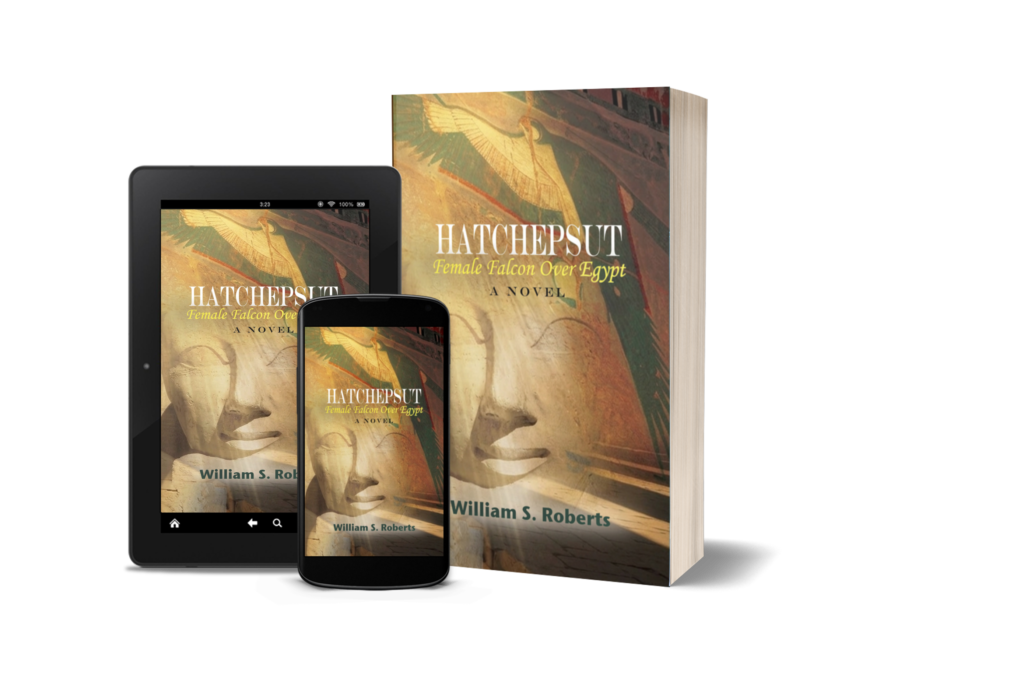
Hatchepsut
Female Falcon Over Egypt
Hatchepsut ruled during the early 18th Dynasty, approximately 1507 to 1458 BC. That makes her reign one of the longest and most prosperous in Egyptian history. She built the magnificent mortuary temple at Deir el-Bahri. She sent a famous expedition to the land of Punt, returning with myrrh trees, ebony, and exotic animals. She raised obelisks at Karnak that still stand today. She called herself King, wore the double crown, the false beard, and the bull’s tail, and appears in inscriptions with male pronouns.
What This Book Is Really About
Roberts set out to write a historical novel. What he ended up with is a book about the price of power – what you have to give up to hold it, what holds you up when you’re holding it, and what you think about when you’re at the end of a long life looking back.
The novel’s prologue begins at what turns out to be Hatchepsut’s final public ceremony. She’s in her late forties, arthritic, overweight by her own reckoning, her teeth hurting. She’s twenty-two years into her reign. Her daughter is long dead. Sennenmut is gone. And she’s standing in the pre-dawn cold performing a ritual that 100 kings before her performed, because Maat must be preserved.